With spring marathon season approaching, it's nearly time to kick off those training blocks!
Whether you're preparing for your first 42K or you've got a few marathons under your belt, there's always something exciting about starting a new block.
Having gone from running my first marathon in around 4:30 to most recently training towards a 3:20, I've learnt a LOT along the way. And my approach to marathon training now looks very different from how it did when I first started.
So, before you start ticking off those long runs here are four things I'd encourage you to think about.

1. Understand your starting point
One of the biggest things I've learnt is the importance of understanding where you're starting from, rather than just focusing on where you want to end up. When I signed up for my first marathon in Paris, I'd been running for around five weeks. Yep, five weeks! Buttt I'd spent years in the gym, so I had a pretty decent base level of fitness, which I think gave me a slightly false sense of confidence.
I was fit, I was strong, and in my head, that meant I could probably run a marathon. Safe to say, I massively underestimated the distance. I had no proper training plan. I'd head out for a run a couple of times a week whenever I fancied it and just hoped for the best. Looking back, I had plenty of motivation, but nowhere near the fitness that a marathon demands.
Now, you absolutely don't need to be marathon-fit at the start of your training block. That's what the training is for!
But understanding your current fitness, how consistently you've been running and what your body is already used to gives you a much better starting point.
It's something I'm particularly conscious of when programming for my own athletes. Everyone comes into a marathon block with a different background, and your training needs to reflect that. What works for one runner won't necessarily be appropriate for another, and getting that initial progression right can make a big difference to how the rest of the block goes.

2. Set a goal that genuinely excites you (and maybe scares you)
One of my favourite things about marathon training is having something BIG to work towards. Whether that's completing the distance or running a PB, having a goal gives your training some direction. But it's also worth thinking about how you're choosing that goal.
Going into Paris, I decided I wanted to run sub 4:30. Why? Honestly, I think I'd just heard people talking about it as a nice round number to aim for!I had absolutely no understanding of pacing strategy, what that pace should feel like or whether my fitness actually supported it. It just about did, although I was in a pretty bad way by the end!
I definitely had far more ambition than knowledge. Nowadays, I set my goals around my current fitness, previous performances and how training is progressing, rather than simply picking a number I like the sound of!
But remember, your marathon goal doesn't have to be set in stone from day one. A lot can change over 16–20 weeks.
This is something I always consider when coaching my athletes. We might start a block with a particular time in mind, but that doesn't mean we're going to spend the next few months with every session at that pace. As training progresses, we look at how fitness is developing, how sessions are going and how well you're recovering. Sometimes that means we can be a little more ambitious, and other times it means adjusting expectations. Both are completely normal parts of marathon training!!
3. Find a routine that works for YOUR life
Marathon training is a commitment, there's no getting around that. But it doesn't mean putting the rest of your life on hold. I've completed marathon blocks while juggling a full-time corporate job, teaching, coaching and café work. Life was BUSY. One of the biggest things that helped me stay consistent was finding a routine that worked around everything else.
For me, that meant 6am training sessions. Nobody was making plans at 6am, work wasn't getting in the way, and there were generally very few things that could interrupt that time. Sunday became my dedicated long-run day. It was in the diary, I knew it was coming, and I could plan the rest of my weekend around it.
Compare that with Paris, when I'd basically head out whenever I fancied a run, and the difference in consistency was huge. Over the last couple of years, I've become more disciplined with my training than ever before. Have I occasionally got up at ridiculous hours to squeeze a session in? Absolutely. But waking up at 3am to get a run done isn't normal, necessary or something I'd ever expect my athletes to do!
The point is that having some structure makes consistency much easier. Maybe that's running before work, fitting in a lunchtime session or doing your long run on a Saturday rather than a Sunday.
When I'm planning training for my athletes, I want to know what their week actually looks like. How many days can they realistically run? Where can strength training fit? Which days are particularly busy?
There's no point programming six runs a week for someone who's going to struggle to fit in three!
A training plan needs to work around your life, not the other way around!
4. Make the most of the experience, not just race day
When you're working towards a marathon, it's easy to become completely focused on the finish line. The target time, the medal. And don't get me wrong, I love all of that.
But some of my favourite marathon memories have nothing to do with my finishing time.
Sunday long runs with my friends became one of the highlights of my week. We'd head out for hours, chat about absolutely everything and somehow make those big mileage days something we all looked forward to.
Then there are the races themselves.
Running Manchester side by side with Erin. Getting to experience Valencia with New Balance. Travelling to different places and experiencing the atmosphere of different marathon events.
And of course, seeing my mum and dad on the sidelines. They've supported me through every race, and there's something quite special about spotting them in the crowd. Even if it means forcing a smile when I'm deep in the pain cave because I remember they've flown halfway across the world to watch me race, ahaha. Those are the things I remember just as much as the running.
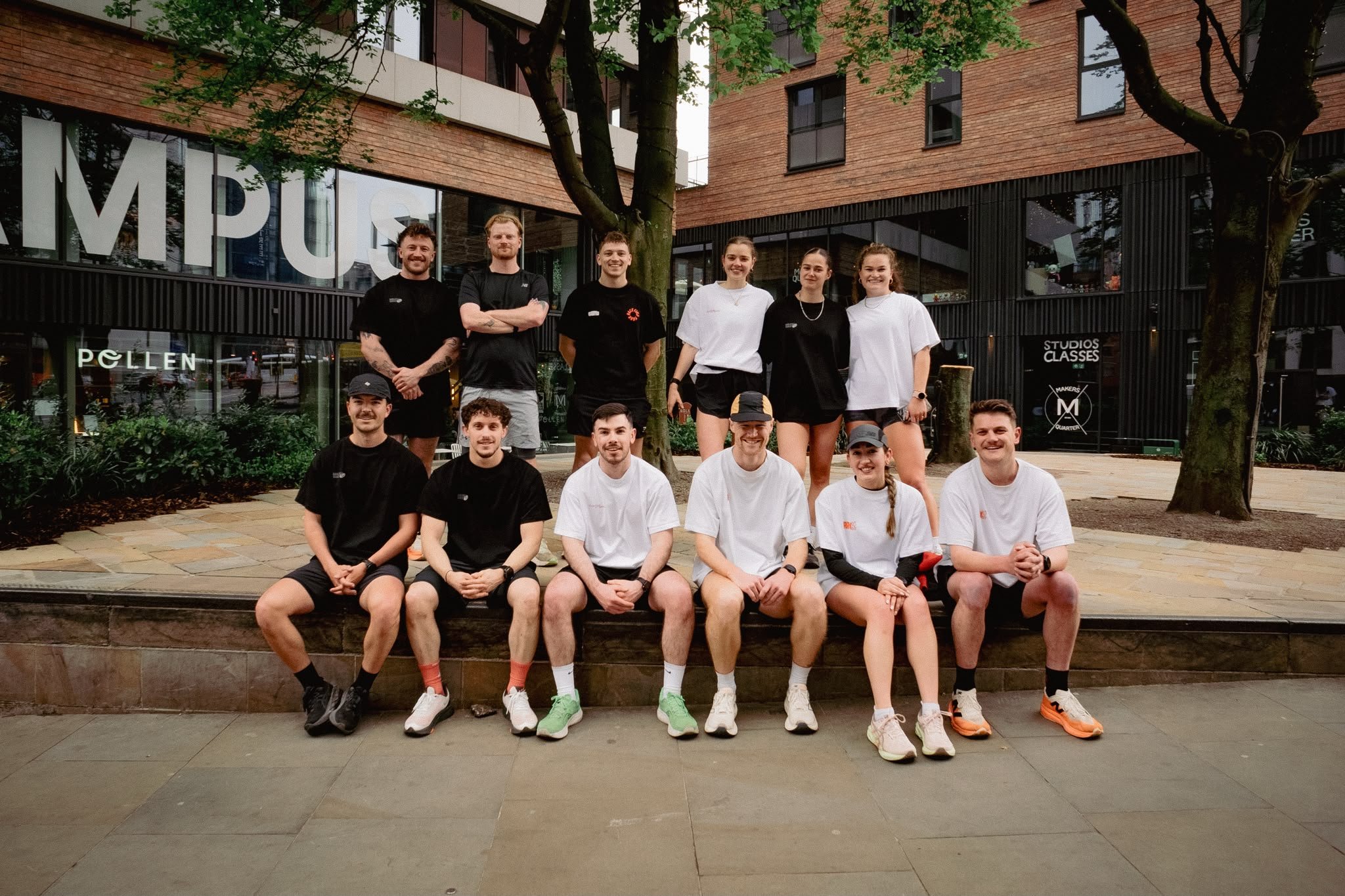
Marathon training is a great opportunity to meet people, train with friends and become part of a running community. So think about how you can make the training enjoyable. Maybe that's joining a running club, arranging your long runs with friends, exploring new routes or entering a race somewhere you've always wanted to visit.
Of course, not every session will be enjoyable, and there will definitely be mornings when you'd rather stay in bed. But you're going to spend months preparing for one day, so you might as well make the most of those months too!!!

Marathon training is a big commitment, but it's also one of the most rewarding things I've done.
I've made plenty of mistakes across my own marathon blocks, particularly in the early days, but I've learnt something from every one of them.
And that's something I try to bring into my coaching now. Helping runners understand their training, find a routine that works for them and approach the marathon with a bit more knowledge than I had when I first started!
Whether you're preparing for marathon number one or marathon number ten, take some time to think about what you want from the next few months, get a plan in place and enjoy having something to work towards.
Let’s get ready for those spring marathons!!!